


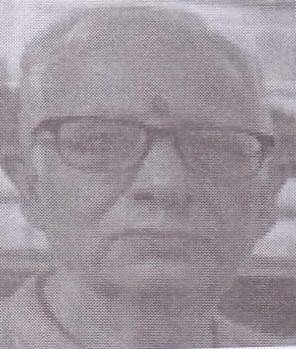
Kashyp Bandhu
Was an unmatched social reformer, a prolific writer and an unwavering philanthropist of the Kashmiri Pandit community who wore many badges of a revolutionary? His most exemplary contribution towards the Pandit community was when he, along with the cooperation of his political colleagues, Sham Lal Saraf, G.M.Shah, brought hundreds of converted Kashmiri Pandit families back to the Pandit religious fold who had changed their religion during the Pakistan invasion in 1947 out of fear and terror. Though these families were reluctant because they were forced to have beef when they converted to Islam. They denied that they would get religiously purified to be Pandits again. Yet Kashap Bhandu changed their mind with his reasonable ideas, embraced them, baptised them by chanting Gytri Manter, and ceremoniously wore fresh holy thread around their necks. Kashap Bhandu was said to have carried a stock of Holy threads with him in a gunny sack when he was assigned the task Shudi Karan of Pandits from five hundred villages of North Kashmir. Bandhu ji compelled Sheikh M. Abdullah to change the Muslim Conference to the National Conference. He had a close family relationship with S. Abdullah, who had confidence in him for sharing major political matters. Shri Tara Chand of Gairu (Noorpur Village), popularly known as Kashyap Bandhu and Bulbule-Kashmir, should have been given the same position among social reformers in Kashmir as is bestowed to Raja Ram Mohan Roy of Bengal. He is better known as a political leader rather than a social reformer. His efforts to revolutionise the thinking of Kashmiri Pandits - change their social structure and social disabilities, brought about a tremendous change in the community, the impact of which is visible even today in the dress of our women folk, i.e. 'saree' and in the fastgrowing education of our women. Born in March 1899 to Thakur Bhat in Gairu (Noorpur village), he received his education up to primary level at the local primary school and then in Srinagar up to the entrance examination. After passing his entrance exam, he began searching for a job and, after considerable struggle, obtained a position as Shajrakash in the Revenue department. However, after some time, he left the job and moved to Lahore. These were the days when organisations such as the Arya Samaj, the Brahmo Samaj, and others were advocating social reforms. He was influenced by the Arya Samaj and joined the Vrjanand Ashram in Lahore. Не became a strict vegetarian and never consumed meat or other animal products. Vishwa Bandhu was the principal of the Ashram. Vishwa Bandhu noticed Tara Chand's keen interest in public service and social reforms and advised him to serve in Kashmir. It was he who named him Kashyap Bandhu. Kashyap Bandhu became the editor of the Arya Gazette in Lahore. While in Lahore, he observed the dire condition of Kashmiri labourers, who used to migrate during the winter months to earn their livelihood. He organised them and founded the Kashmiri Mazdoor Board, where he served as Secretary. He came into contact with revolutionaries and joined Bhagat Singh's party. He was arrested in Sanders' case but was subsequently released. Kashyap Bandhu was always eager to serve Kashmir, and even when he was away from the State, he kept himself informed about its conditions, especially regarding his community the Kashmiri Pandits. It was during these years, at the beginning of 1930-31, that the Muslim Conference was established. In 1931, while the leaders of the Muslim Conference were imprisoned, a procession was organised in Srinagar demanding their release. The procession became unruly, and the mob looted the houses and shops of Kashmiri Pandits and other Hindus. Some individuals were killed. Although the violence and looting ceased quickly, the scars endured for a long time. Following this incident, Kashyap Bandhu returned to Kashmir. He was already familiar with the situation in the State, particularly concerning the Kashmiri Pandits. Upon his return, Shri Prem Nath Bazaz, Shri Shiv Narain Fotedar, Shri Jia Lal Kilam, and Bandhuji founded the "Yuvak Sabha" with its central office at Sheetal Nath. It was from this centre that Bandhuji launched his political and social reform activities. He understood that to improve the community's conditions, social evils needed to be eradicated, and reforms must be introduced. In the early 1930s, he began his programme of social reforms. The reforms undertaken for implementation were: 1) 2)
Widow Remarriage:
In those days, widows were not allowed to remarry as society did not approve of it. Young widows had to suffer for their whole life and depend on their existence either on their in-laws or their own parents. Kashyap Bandhu started propagating the movements with other workers. Most of the workers who worked with him volunteered and married widows. That was the example they put forth for the community. In those years, many widows got remarried.
Wasteful expenditure and other customs:
Most of the expenditure incurred during marriages or other festivals was wasteful. The manner in which feasts were served for days together on such occasions and food stuffs and other things wasted was unbearable. To stop all this, Bandhuji anp his colleagues started picketing and used to sit on dharnas wherever such feasts were organised. He requested the people to limit the number of Baratis and stop wasting the money and the food stuff. He also advocated limiting the number of preparations on such occasions and refrain from giving huge dowries. Those days it had a salutary effect on the community.
Girls' Education:
The greatest contribution of Kashyap Bandhu is the spread of education among the girls. It was during that time that Girls Schools such as Vasanta School came into existence. We owe it to him that our womenfolk have taken to education and are not lagging in any field today.
Weekly Congregations:
Weekly gatherings used to be organised at Hari Parbat, where the community people used to gather in large numbers. Yajnas (Havans) were also performed. This was done to imbibe unity and brotherhood within the Pandit Community.
Mochchi Phol:
Kashyap Bandhu started collecting contributions and donations both in kind and cash to help widows. His volunteers visited every house to collect rice and other items to help the economically and socially impoverished persons. He started 'Silai Kendra' (Sewing centres) to provide training to the needy widows so that they could sustain themselves.
From Pheran to Saree:
Today, our womenfolk are in sarees and salwar kameez During the period of early thirties, sarees and salwar kurtas were not in fashion. Pherar was the common dress for our women without any undergarments beneath it. This dress was responsible for lethargy and laziness. Bandhu ji requested the womenfolk to change their dress and start wearing sarees, and that too khadi sarees. There was initial resistance, but he and his volunteers visited each house and requested the women to change their dress. His efforts bore the result, and today saree and salwa kameez have become a normal dress of our womenfolk. To educate the people for these social reforms, he used the media to a great extent. He published many of his ideas through articles in the Daily Martand (of which he was the first editor), and other newspapers like "Kesari" and "Desh". He was most adept and had control of the language, which ranked him as a versatile editor. But alas! Today, we have not only forgotten the man, but we have betrayed him. He wanted us to shun the dowry system - wasteful expenditure - show off on festivals, particularly on the occasions of marriages. We have not adhered to his teachings. Our demand for dowry has grown to awful proportions; the expenditure on marriages has multiplied, and our marriage festivities continue for days together. Many things have been added to our menu-Chicken, which was once forbidden in our community diet list, has become one of the varieties which is served at the receptions and other occasions. 'Nena Batta', 'Hyot Dyot', Gharachun etc. have become a necessary part of our culture. Khadi, which Bandhuji wanted our womenfolk to use, has given place to Banarasi and other costly silken sarees. This is how we have betrayed the man who gave us self-confidence and self-respect, who wanted our emancipation and development. We can still pay him our respects and shradhanjali by following his ideas and teachings. Let us observe his birthday as the day of Social Reforms every year and organise lectures, seminars on that occasion. The intensity of the opposition faced by Bandhu ji will be gauged by the following Kashmiri verses that were attributed to him in taunting manner.
DISCLAIMER:
The views expressed in the Article above are Poshkar Nath Raina views and kashmiribhatta.in is not in any way responsible for the opinions expressed in the above article. The article belongs to its respective owner or owners and this site does not claim any right over it. Copyright Disclaimer under section 107 of the Copyright Act of 1976, allowance is made for "fair use" for purposes such as criticism, comment, news reporting, teaching, scholarship, education, and research. Fair use is a use permitted by copyright statute that might otherwise be infringing."
Courtesy: Poshkar Nath Raina and Koshur Samachar-2025,December,