


Rakesh Handoo - The Forgotten Flame of Resistance
Rakesh Handoo - The Forgotten Flame of Resistance
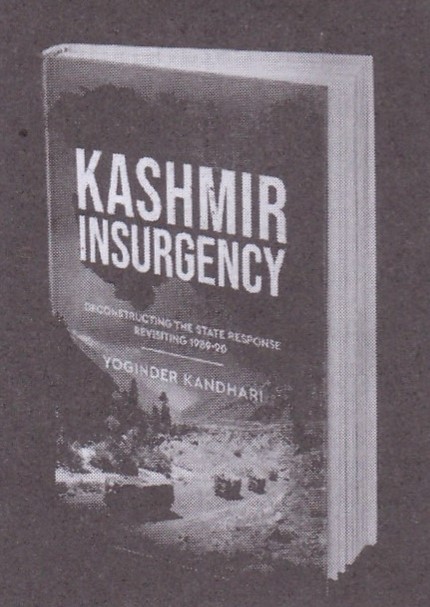
In the winter of 1990, when the chilling winds of fear and fanaticism swept through the entire community was forced to flee There ancestral land not as refugees of wat, has the Kashmiri Pandit community, victims an orchestrated campaign of terror, bore not the trauma of displacement but also the indignity of accusations "Why didn't you resist? became the painful sin This question ignorant and misplaced ignored a grim reality, the collapse of the state, Ae helplessness of unarmed civilians, and the overwhelming force of trained insurgents., when even the CRPF and the Army struggled how Could a civilian population, abandoned and betrayed, be expected to resist? Yet there were those who did resist One such name is Rakesh Handoo a quiet valour, a man with no uniform but the heart of soldier: His story doesn't often find its way to history books or news headlines, but it is che in the blood, sweat, and silent tears of resistance Disillusioned with the apathy of prernments and the hypocrisy of political handlers, Rakesh refused to live with KASHMIR INSURGENCY the shame that others imposed on his people. With a few like-minded young Pandits educated, courageous, and determined he organized protests, torch marches, and burned the effigies of those who had betrayed their trust VP Singh Mufti Mohammad Sayeed and others. When most voices were muted by fear of manipulate try ideology, Rakesh and his team stood firm came knocking, seeking volunteers who could help them navigate the perilous alleys of Srinagar, where every comer held the shadow But he didn't stop at protest. When the CRPF of a gunman and every crowd could mask an ambush Rakesh saw the moment he had long prepared for. Eight brave yosing mana bless of migrants and those who had stayed back- answered the call. Among them, he was a leader in spirit and strategy, In March 1990, they reported to CRPF Srinagar not as exiles, but as informants. Banta lab camp. From there, they entered scouts, and human shields in operations that were too dangerous for even trained commandos Armed with nothing at find, they walked into gunfire and grenade zones. They insurgents, the safe houses, the hidden threats were there not to shoot, but to identify the Initially denied weapons, they stood exposed -unarmed yet undaunted until their demands for basic protection were finally heeded in May 1990, when they were allowed to carry weapons. Stationed at Islamia College in Hawal, their knowledge of the streets, language, and local psyche became the CRPF's most potent weapon. They mingled with crowds, often dressed like insurgents themselves, gathering intelligence and enabling swift, decisive raids. Their efforts led to the capture of hardened militants, the seizure of arms caches, and perhaps even the prevention of untold tragedies. Their presence saved lives, but it never saved them from oblivion. The government's response seemed frozen in time, as if haunted by the unhealed scars of that era, unable to see beyond the rudimentary facilities and inadequate provisions provided then by a struggling nation. Medical aid to the camp residents was non-existent, or at best a formality. In addition to camps in Jammu City, the administration set up camps in Kathua, Battal Walia, Jib Thati, Sports Stadium in Udhampur and Nagrota. Some states, like Delbi, also rooms, shops, cattle sheds, storerooms, etc. "established camps for Kashmiri migrants. Many families stayed in rented Rakesh Handu recalled the challenges of feeding thousands of mouths. "He approached Shiv Sena Punjab for rations, who provided truckloads of grains for the refugees. In utter disregard for the humanitarian crisis, the State administration did not allow these trucks to cross the interstate border at Lakhanpur, the entry gate to Jammu and Kashmir. "Rakesh and other volunteers struggled to organise the transhipment of the grains from Lakhanpur to various camp locations in Jammu. Some volunteer organisations also contributed essentials like foodstuff and bedding. For every stack of fifty blankets, five hundred people would queue up. The Government took its time to release salaries to in-service migrant employees, paying them a mere five hundred INR per month until June 1990, when they started receiving their entitled salary. "Migran experienced severe economic deprivation, compelling them to sell household items, jewellery and everything they possessed. What a tragedy! Vijay's family was no different. Dejected and running out of cash, his father returned to Srinagar to put his life back on track. Barely had he returned home, the authorities imposed a prolonged curfew in Srinagar. "In Jammu, the migrants faced immense harassment and humiliation from locals who viewed them as 'cowards' and 'beggars' surviving on handouts. While Rakesh Handu organised protest rallies, the police often responded with baton charges. As the government announced assistance in kind and cash-five kg of rice and five hundred INR per family. "In exile, survival was the primary concern, Migrant students were initially denied admission to schools and colleges in Jammu. The local population worried that admitting migrants would strain their limited job opportunities, revealing how parochial considerations overshadowed a broader humanitarian crisis. According to some reports, Dr Karan Singh intervened to enable migrant students to enrol in educational institutions in Jammu. However, this concession came with the condition that migrant students would not seek employment in the Jammu region. Even then, only a few KP students gained admission to regular Government schools. The Education Department's order restricted their admission to afternoon shifts beginning during hot mid-day hours. The Government also established Camp Schools for migrant students at various locations. "Vijay shares his experience of Camp School at Room Nagar, Jammu. "This co-educational school lacked basic amenities like drinking water and toilets. Students had to set up tents each morning to escape the blistering sun as they attempted to absorb their lessons. The closest drinking water source was a tank, uncleaned for years, one and a half km away. No sooner had the students returned to school having quenched their thirst than they felt parched again. This blatant neglect by the nation and State ignited the latent activism in Vijay and his friends. Every day, his group would arrive at school half an hour before starting time to erect the tents and organise drinking water for schoolmates. Bakosh's healer ship and the mams succes who began planning a high-risk in nitration restor Jak to penetrate militant ranka and gather intelligence rom the heart of enemy camps. The mission could have changed the sourre of operations. The team red. They were ready pat then came12 May 1900 massimation of Maulvi Farooq. The Valley enacted Cavour Jag Mohan was removed man who had offered some semblance of support to the displaced Pandits. This political maneuver crushed the mam murale. Rakesh recalls with pain how his men sensing betrayal vel again, decided to abandon the mission. He regrets the silence of the WP the dubions surrender of VP Sugh in releasing morists for Rubaiya Sayeed, and the athematic betrayal of those trying to serve the One by one, his comrades lett, me studies, Rakesh himnuelt was forcibly pulled baby his patents fearful for its life revonded, a chapter that na meditation cared What was left behtod wat a legacy no one to acknowledge. The State und them when convenient and forget them once the task was done And yet, This story must be told Rakesh Handon is not just a name in the shadows of counter insurgency. He is a symbol of what it means to love your an eland even when it rejects you. He is the answer to the question Why didn't you realst! because he Did, and so did the brave Pandit youth Wha walked into war zones without recognition, without medals, and without regrets Let us remember him, and those like him not with pity, but with pride Let the silenced bravery of Kashmiri Pandits finally find a voice. Let history correct its course.
DISCLAIMER:
The views expressed in the Article above are Army Veteran views and kashmiribhatta.in is not in any way responsible for the opinions expressed in the above article. The article belongs to its respective owner or owners and this site does not claim any right over it. Copyright Disclaimer under section 107 of the Copyright Act of 1976, allowance is made for "fair use" for purposes such as criticism, comment, news reporting, teaching, scholarship, education, and research. Fair use is a use permitted by copyright statute that might otherwise be infringing."
Courtesy: Army Veteran Sh. Yoginder Kandhari and Koshur Samachar- 2025, July