


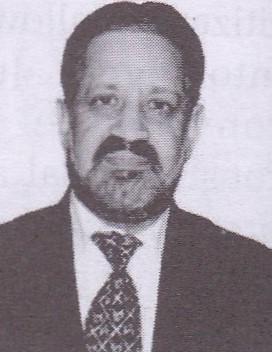
Ashok Ogra
M. K. Raina Journey Through Art & Conflict
M. K. Raina Journey Through Art & Conflict
To 1967, a young lad from Srinagar, M.K. Raina, was admitted to the prestigious National School of Drama, where the legendary Ebrahem Alkazi was at the helm. The drama school, an open house encouraging students to decode India's diverse traditions, resonated with MK's upbringing, shaped by the secular environment of Kashmir. He had his early education at Lal Ded Memorial School and later Hindu High School, Srinagar, where the Kashmiri literary figure Dina Nath Nadim was Principal. At school, he was exposed to plays and also acted in "Neki Badi." The school was located at Sheetal Nath complex that held socio-cultural and political importance for the Kashmiri Pandits and was the epicenter of their politics. Although initially drawn to playing hockey and leaming Hindustani classical music at Prem Sangeet Nike tan, it wasn't long before he emerged as an accomplished theatre artist. M.K. Raina has come out with his memoir titled BEFORE I FORGET in which he shares personal stories of his formative years and his experiences, challenges, and the philosophies that shaped him as an artist, civil society activist, and teacher. He demonstrates narrative mastery when reflecting on significant historical eventse the tense atmosphere that gripped the valley when the Holy Relic disappeared from the Hazratbal Shrine in 1963. Nehru deputed Shastri to calm the situation: "Shastri’s had to borrow overcoat from Nehru for the severe winter. Raina's writing, infused with nostalgia, captures the both the turbulence and peaceful coexistence of a bygone era. In the chapter "Growing Up, Raina's account often draws on familial experience: he running through the narrow, winding alleys, his outings echoing against the houses adorned with wooden balconies and ornate lattice windows. These structures, some bearing the marks of time, whisper stories of the many generations that have called them home Raina's family, like many thousands of other Pandits, fled the valley when militancy erupted in 1990. The mosques were effectively used by the terrorists to disseminate highly inflammatory slogans targeting Pandit community. The entire valley was put under strict curfew. He narrates the harrowing experience when he had to cremate his mother At each security checkpoint, Raina had to lift the shroud to show them his mother's body. He laments the loss of centuries-old links of interdependence that existed among neighbors He writes. "Thegged all my family members and uncles not to delay their departure from the valley. It was not sate anymore to stay back He quotes his brother when describing the sudden turn of evente "home lost in five minutes. He is appalled at the lack of understanding of most secular parties when talking about the plight of Kashmiri Pandits However, his declaration, "We should never forget but always forgive," balances memory with forgiveness and emphasizes the necessity to move forward and heal. It is in Delhi where MC's career took wings. In the chapter 'Delhi Fulcrum,' the author describes his days of struggle as a theatre director and actor. At Meghdoot Theatre, Raina honed his skills as a professional. "Meghdoot Theatre has been where much of contemporary Indian theatre history has happened, presenting the best world dramas, from Sanskrit to Western classics and major contemporary works of Indian and foreign playwrights. This was the stage where Om Shivpuri, Uttara Baokar, Surekha Sikni, Manohar Singh Pankaj Kapoor, Seema Biswas, K.K. Raina, Naseruddin Shah, Om Puri, Anupam Kher, L and many others trained to become seasoned actors and directors" After graduating from NSD in 1971, Raina declined job offers, opting instead to be a freelancer. During the genocide of East Bengalis in 1971, Raina put up street plays framed around the poetry of Faiz Ahmed Faiz to highlight the plight of the refugees. He formed a theatre group called PRAYOG which performed many plays, including Badal Sircar's "Juloos," as a tribute to those who suffered due to demolitions carried out at the Turkman Gate during the emergency. Soon, PRAYOG emerged as one of Delhi's major experimental theater organizations.This freedom to express one's thought was cut short when the emergency was imposed in 1975 Raina's play "Qalk Cinder (Bertolt Brecka) was banned, and he was summoned by the authorities. However, MK quietly left Delton, only to return to active work after the emergency was lifted in January 1977 He went on to direct several memorable productions like Kabira Khada Bazar Mein, Karmawali, Paril Kukh, Kabhi Na Chooden Khet and The Mother, Bhanbhatt Ki Atmakatha, Godan, Maybe, Tum Saadat Hasan Manto Ho, Badshah Pather, and many more. He also directed several documentaries and abort films, and acted in several TV jingles. The advent of parallel cinema in the late 1960s provided professional theatre actors like Raina the opportunity to embrace the film medium. Late Avtar Kaul cast Raina in his award-winning film "27 Down." This began Raina's association with cinema, working with leading directors of that period, including Mani Kaul, Avtar Kaul, Kumar Shahani, Buddhadeb Bhattacharya, Marina Sen, Govind Nihalani Ketan Mehta, Basu Chatterjee, Basu Blattacharya, and many others. Perhaps beconne of gaina achieved in both the attr and films, in 2000 Shabana Azmi asked him he would consider heading the Acting Department at the reputed Film Institute, Pune Raina laughed off the gestion, remarking, " am a Kashmiri. I can only sumpromise up to the trees and monuments of Delhi after leaving the gardens and Chiners of Kashmir" During the Punjab militancy, Raina, along with journalist Shamim Ahosed, Prue. Mushes ul-Haq, and his wife Zoya Haman, met Mesa Indira Gandhi at her residencs. When asked about the situation in Punjab, Mos. Gandhi remarked, "Whom do you talk to? There you talk to one group of politicians, and then another group appeans She then asked why Sheikh Abdullah converted the beautiful meadows of the sacred Hari Parbhat anea in Srinagar into a housing colony, encroaching on the path of sacred sites for both Kashmiri Pandits and Muslims, where they worshiped and meditated under the huge Chinar trees. "A great site of composite culture had changed Raina does not explain what prompted this sudden switch on the part of Mrs. Garsdhi from Pansab to Kashmir The only time Raina felt let down by the city he loved, Delhi, was when mobs indulged in mass killing of Sikhs as revenge for the assassination of Mrs. Gandhi. He took part in several peace marches along with George Femandes, Chandra Shekhat, Madhu Dandavate, and many others. With sadness, he recalls, "In the dark of the night, an orange color permeated the sky and as I turned my head, I saw Delhi buming in all directions Raina provides an interesting account of his meeting with Sardar Joginder Singh, the father of slain Sant Bhindranwala. He was part of a film crew gone to interview Joginder who asked Raira: "Do you agree that Sikhs are a quam? Initially, Raina dodged the question, but when Joginder Singh insisted on getting an answer, Raina casually replied. No, Daj, I do not agree." And that was it. Joginder refused to continue with the intervww. The tragic murder of his long-time friend and theatre activist Safdar Hashmi by Congress workers in 1989 left Raina in deep sorrow. The book elaborates on the dangers that social and cultural activists face in tumultuous times. Similar pain is palpable when he recalls the demolition of Babri Masjid in December 1992 SAHMAT an organization co-founded by Raina in memory of Safdar Hashmi, decided to stage massive protests across the country. The poster that was printed carried the following lines of Kabir "Sadhu Dekhoyeh Jag Baurana, Hindu Kahe Hai Ram Hamara, Musalman Rehmana Aapas Mein Dou Lade MarathainMaram Koi Najana." Anhad Garje the words from a poem by Kabir, was used as a clarion call to the nation to unite and spread the message of love. Having traveled extensively, Raina's work encompasses a wide range of geographical and cultural settings of India and neighboring countries. He has also been to Lahore, where he staged the l'unjabi play BuheBariyan From conducting theatre workshops in Nagaland to working for the popular TV serial SURABHI (produced by Siddharth Kaki, to exploring diverse cultural spaces by engaging with the traditional folk theatre Bhand Pather community, to interacting with students of J&K Raina has been active in building bridges and fostering understanding and mutual trust. Recipient of prestigious honors such as the Sangeet Natak Akademi Award, Sahitya Kala Parishad Samman, Sankriti Award, and B.V. Karanth Lifetime Achievement Award, Raina's life has been one of a vivid tapestry woven from his relentless drive for social change. Though he has acquired great distinction, he has never been self- seeking, preferring that his work speak for itself. In the chapter 'Kashmir Implodes, Raina sums up his dilemma: "I felt that my Kashmir, my home, where I was born, brought up, educated, and nurtured, was now a closed chapter for me. But my mind was not ready to accept this fact." The pain of 'missing' comes out strongly in his memoir. However, one wonders how does Raina negotiate the dilemma that most migrants like this reviewer face: The More We All Long For Home, Father It Appears. He attributes his success to two teachers: Dina Nath Nadim for inculcating in him the values of Kashmiri culture and its legacy, and Ebrahem Alkazi, who Raina writes "gave me a talisman which I hold very essential in whatever I do, his words that I always remember when he said to me, 'you know, Raina, in our country, if you want to achieve something, remember to lead yourself from the front, and don't wait for someone else to lead you." Nothing can be more gratifying to M.K. Raina than to see his memoirs BEFORE I FORGET showcased together on the bookshelves alongside the new biography of his teacher Ebrahim Alkazi, HOLDING TIME CAPTIVE-highlighting their contributions side by side. Published by Vintage (Penguin Random House), the memoir is intellectually engaging and profoundly impactful. Raina's soul is deeply intertwined with the majestic Chinar trees of Kashmir, as well as with cultural reverence and artistic innovation. He recreates his memories, creating an experience within an experience. No wonder the book resonates with authenticity and emotional truth. For those of us who have long known and admired Raina, this book validates and tells them why.
DISCLAIMER:
The views expressed in the Article above are Ashok Ogra views and kashmiribhatta.in is not in any way responsible for the opinions expressed in the above article. The article belongs to its respective owner or owners and this site does not claim any right over it. Copyright Disclaimer under section 107 of the Copyright Act of 1976, allowance is made for "fair use" for purposes such as criticism, comment, news reporting, teaching, scholarship, education, and research. Fair use is a use permitted by copyright statute that might otherwise be infringing."
Courtesy : Ashok Ogra and Koshur Samachar-2025 , March